Sunday, June 24, 2007


Peter Orlovsky, Jack Kerouac and William S. Burroughs
(photo by Allen Ginsberg)

Tuesday, June 19, 2007


Having taken meticulous notes and planned the novel duringhis cross-country travels, JACK KEROUAC wrote the first draftof On the Road in a three-week burst of creativity, tapingsheets of paper together so they could run through histypewriter uninterrupted. After a cross-country exhibitiontour, the original scroll has returned to Lowell’s BoottCotton Mills Museum, where its display will be part of "ONTHE ROAD IN LOWELL,” a festival of readings, musical performances,and art exhibits (see www.ontheroadinlowell.org) planned aroundthe 50th anniversary of On the Road. The Beat Generation isreborn at Lowell National Historical Park, 115 John St,Lowell June 15–September 14 [reception June 15: 6-9 pm]


Thursday, May 24, 2007


Hogan's Beat Fever Jack Kerouac inspires outerwear
debut Thursday, May 24, 2007

Hogan's Jack Kerouac bomber jacket
(NEW YORK) Hogan will unveil its first-ever outerwear
piece on Tuesday, when the Tod’s Group-owned brand
debuts the Jack Kerouac Project, a capsule collection of
six leather goods pieces inspired by the Beat novelist, writer,
poet, and artist, which will be available exclusively at
Paris retailer Colette for one month. In addition to the
$1,590 bomber style jacket, the collection consists of two
styles of shoes (a $295 high top sneaker and a $475
working boot) and three bags (a travel bag, book bag, and
back pack priced from $950 to $1,290). Colette will celebrate
the launch by showcasing a series of photographs influenced
by Kerouac’s novel On the Road in its iconic rue Saint-Honoré
store windows. Following its debut at Colette, the collection
will be available in all Hogan stores worldwide beginning in July.

Thursday, May 17, 2007

evento em Roma dedicado a Jack Kerouac, informação
recolhida na newsletter Le Cool de Roma.

Dal Vivo Bits Of Beat
Quest’anno cade il cinquantenario della pubblicazione di
“On the road” di Jack Kerouac, quale modo migliore per
omaggiarlo se non a suon di jazz? Questo è uno degli intenti
dei Bits Of Beat, progetto aperto che vede la partecipazione
di musicisti e poeti tutti felicemente intossicati dalla Beat
Generation, che tante menti ancora riesce ad influenzare.
In questo concerto assisteremo ad una sorta di reading della
leggendaria opera di Kerouac , e se sulla carta può sembrare
un’operazione nostalgica, beh leggetevi qualche pagina del
randagio per eccellenza e vi ricrederete. Inoltre, da Rinascita ,
c’è anche una caffetteria dove poter scegliere il giusto
accompagnamento “gustativo” alle musiche, per sentirsi,
finalmente, battuti e beati./ Italo Rizzo

DOVE
Libreria Rinascita Viale Agosta, 3606.25204819

QUANDO
21:30

COSTO
Gratis

Wednesday, May 16, 2007

The Subterraneans (1960)
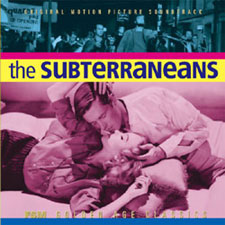


Limited Edition of 3,000 Copies.
Composed by: Andre Previn

Released by Special Arrangement with Turner
Classic Movies Music The Subterraneans (1960)
was an attempt to package the Beat generation
for mainstream consumption. Based on the novel
by Jack Kerouac, the film was produced by the
legendary Arthur Freed and starred George
Peppard, Leslie Caron and Roddy McDowall. Its
reception was mixed but stellar in one key respect:
the progressive jazz soundtrack -- one of the all-time
best -- composed and conducted by Andre Previn.

Previn was the ideal composer to pull off such a
marriage: at once a classically trained musician
who scored a bevy of high-profile pictures for M-G-M
in the 1950s, he was also a talented jazz pianist
who soaked up the atmosphere of the West Coast
jazz movement -- all at 31 years of age.

Previn assembled a world-class roster of jazz artists:
Gerry Mulligan (who also acted in the film), Carmen
McRae, Shelly Manne, Red Mitchell, Buddy Clark,
Dave Bailey, Art Pepper, Russ Freeman, Bill Perkins,
Bob Enevoldsen, and Jack Sheldon. Previn himself
appeared on-screen performing with The Andre Previn
Trio. Previn composed an underscore that married his
jazz source cues with the romantic aesthetic of the
Hollywood symphonic style -- the venerated soloists
move in and out of Previn's romantic, often modernist
sound.

The Subterraneans was released on LP at the time
of the film, and in recent years several of the jazz source
selections were included on a Rhino compilation. This
CD presents the definitive Subterraneans soundtrack
running over 79 minutes: the original album program
followed a new program of bonus selections, containing
all of the previously released music and much more,
including the underscore. Unlike most FSM CDs, the
selections are not presented in film sequence, because
in this case the score -- with the jazz source cues --
would not play well in literal film order.

The music has been remixed and remastered in
stereo from the original 35mm three-track masters,
with the exception of certain source cues which were
recorded on monaural 17.5mm film. Liner notes are
by Jeff Eldridge and Lukas Kendall.

Tuesday, May 15, 2007

PATTI SMITH TALKS ABOUT
ALLEN GINSBERG'S DEATH

There 's a Patti Smith audio clip on her
myspace page that is pretty cool. It's
called "Don't Say Nothing" and after 2
or 3 minutes of singing Patti starts
talking about her experience at Allen
Ginsberg's apartment the night he died
in 1997. It's a pretty powerful clip. It's
9 minutes long all together, but worth
the investment. Click on the link below
and then click on the audio clip "Don't
Say Nothing". You'll know you found the
right clip when you see a picture or Allen
pop up.

http://www.myspace.com/pattismith

KEROUAC'S BIRTHPLACE AT 9 LUPINE
ROAD IS ON THE MARKET

The apartment Jack Kerouac was born
and lived in at 9 Lupine Road in Lowell, MA
is available for rent. And beyond that, the
owner intimates if someone makes the right
offer the place is available for purchase.
Seems to me some well heeled Beat Fan
ought to buy this baby for posterity.
The Beat Museum would like to participate
but our plate is full right now.

http://www.lowellsun.com/front/ci_5881618

Sunday, May 13, 2007


The Life and Times of Allen Ginsberg

Jerry Aronsen's The Life and Times of Allen Ginsberg disc set is one organized documentary augmented by an extensive collection of film material, photos, interviews and other 'historical evidence' relating to the famed Beat Generation poet. The feature-length documentary bearing the disc's title was first released ten years ago and provides a fine introduction to the interior life of this entertaining and unique artist. Hailed as a poetic genius, Allen Ginsberg spent a productive life as both an inspiration and a guiding moral compass for the counterculture.

The documentary tells the story of Ginsberg's life through prime-source testimony from his associates and loved ones. Director Aronsen had the cooperation of Ginsberg's brother Eugene and stepmother, both of whom are in awe of Allen's accomplishments. We see family photos and home movies from the poet's childhood in the 1930s. He looks like a happy kid, playing at the beach with his cousins.

In reality, Ginsberg's home life was a nightmare of emotional hardship and tragedy. Allen's schoolteacher father was supportive but his mother suffered from acute paranoia and spent serious time in mental institutions. By the 1940s she was institutionalized on a near-permanent basis. The experience forced Ginsberg to take life seriously at an early age; when his later associates in art suffered problems with alcohol and drugs, Allen would be a stabilizing factor.

In New York in the middle 1940s Allen linked up with poets and writers like Jack Kerouac and Neal Cassady, the vanguard of "The Beat Generation." He also met writers like William Burroughs and discovered his personal homosexuality. Aronsen documents the artistic interactions and disagreements of this group. Then a famous 1955 poetry reading in San Francisco 'united' the West and East coast Beats, with Allen on top of the artistic heap with his groundbreaking poem Howl. Addressed to his friend Carl Solomon, the poem makes reference to many of Ginsberg's associates and their histories in the Beat movement.

Ginsberg returned to personal concerns with the poem Kaddish, a rumination about his late mother Naomi. Anything but a rebel, Allen is shown as close to his brother and father. He later encourages his father to publish his own poetry.

The docu doesn't say much about the Howl obscenity trial or any of Ginsberg's publicized problems. It instead shows his rise to the status of unofficial Beat poet laureate. We see excerpts of his guest spots on Dick Cavett and William F. Buckley's talk shows; even Buckley respects Ginsberg. A section of the film documents Ginsberg's activities as a fervent anti-war and anti-nuke protester, but one who openly discouraged angry demonstrations like the '68 Chicago debacle. When activists began preaching open defiance of the law and radicals pronounced declarations of revolution, Ginsberg spoke out against them. He'd later say that the polarizing effect of seeing longhairs battling the police only strengthened the Right, helping Nixon's election campaign, prolonging the war, and so forth.

The seventies show Ginsberg relating to transcendental religions, developing his personal philosophy and continuing to write. The later years see him dealing with family setbacks and publishing more works, including books of his photography. Always candid, genial and thoughtful, Ginsberg is seen in many interviews from the late 1950s onward. The revised docu ends with a simple shot of his gravesite in 1997.


--------------------------------------------------------------------------------

New Yorker Video's 2-Disc DVD of The Life and Times of Allen Ginsberg should be considered an audio-visual accompaniment to serious study of the poet, as the biographical scope of the docu does not pretend to penetrate into all corners of the man's life. But what is here is personal and authoritative, and highly useful to anyone seeking a full understanding of the man. The many extras encompass more poetry readings, incidental film of Ginsberg with William Burroughs and Neal Cassady and Ginsberg at an exhibition of his photography. An excerpt is included from Jonas Mekas' film Scenes from Allen Ginsberg's Last Three Days on Earth as a Spirit, along with odd bits like Ginsberg and Bob Dylan reading poetry at the grave of Jack Kerouac.

The bulk of the extras are filmed interviews with notables talking about Ginsberg, mostly uncut and ranging between a couple of minutes and a quarter of an hour in length: Joan Baez, Beck, Bono, Stan Brakhage, William Burroughs, Johnny Depp, Lawrence Ferlinghetti, Philip Glass, Peter Hale, John Hammond, Jr., Abbie Hoffmann, Jack Johnson, Ken Kesey, Timothy Leary, "The Living Theater" (Julian Beck and Judith Melina), Paul McCartney, Jonas Mekas, Thurston Moore, Yoko Ono, Lee Ranaldo, Gehiek Rimpoche, Bob Rosenthal, Ed Sanders, Patti Smith, Steven Taylor, Hunter S. Thompson, Bob Thurman, Anne Waldman, and Andy Warhol.

Photo galleries, a memorial tribute and a music video called Ballad of the Skeletons complete New Yorker's package. The Life and Times of Allen Ginsberg is a major research item for any evaluation or study of the poet's life.

Wednesday, May 9, 2007

And for those who just can’t get enough of Kerouac,
NewWest.net reader Michael Hess wrote a comment
last week about the various map projects he’s been
working on to geo-locate the places Kerouac wrote
about. Hess is blogging as he maps.Aqui

Tuesday, May 8, 2007

Naropa University, the Boulder college founded by
Kerouac’s beat buddy Allen Ginsberg, is planning
to celebrate in a big way, and is gearing up for
its Kerouac festival to be held from June 30 to
July 1 this summer. In the meantime, Kerouac fans
can check out the festival’s blog, which includes
news, audio, and video on all things related to
Kerouac. Aqui

Sunday, May 6, 2007

Friday, May 4, 2007


fishing with guns
@ hunter s. thompson
c-type print
91.5 x 91.5 cm

mais imagens aqui

Sunday, April 29, 2007

Sunday, April 22, 2007

SAN FRANCISCO FILM FESTIVAL, 26 APRIL - 10 MAY, 2007


A half-century ago, in 1957, "crazy dumbsaint of the mind"
Jack Kerouac published the book that was to crack open
postwar American literature and society and become a blazing
iconic beacon of the Beat Generation and a light that never
goes out for playful, seeking dreamers everywhere, then and
since. Three generations have dug the passionate jazzbo
language of On the Road, stuffed a copy in a backpack and hit
the highway in search of enlightenment. No other contemporary
literary work can claim such an immediate and enduring impact.
After five decades, it still sells up to 130,000 copies a year. As
part of its own 50th anniversary celebration, SFIFF and
Litquake pay homage to Kerouac’s golden book with a
portmanteau program of readings, testimonials and images
honoring Sal Paradise, Dean Moriarty, Carlo Marx, Ed Dunkel,
the lost city of San Francisco and, of course, Kerouac himself,
the "writer-director of Earthly movies Sponsored and Angeled
in Heaven." Peter Coyote, Michael McClure and Diane DiPrima
will take part in this cultural celebration, with more Beat
Generation aficionados expected to join them.

Graham Leggat

Wednesday, April 18, 2007


FINDING MY KEROUAC

FINDING MY KEROUAC: On the Road at Mid-Life is an audio documentary
based on the spirit of Jack Kerouac's On the Road. The mostly autobiographical
novel is 50 years old this year - it was published in 1957 - and has been the
inspiration of road and life travelers since its debut.

In Finding My Kerouac, Kerouac's On the Road fuels two mid-life travelers
through a 4000 mile journey of reflection, contemplation, and rediscovery. The
documentary captures this through the spirit of Kerouac's travels.

http://findingmykerouac.com/

Thursday, April 12, 2007

The Road To Discovery Begins At '30'

By Ted Scheid
cbs3.com Film Festival Coverage
PHILADELPHIA

The open road has beckoned storytellers for centuries with its seemingly endless opportunity for discovery. First-time filmmaker Curtis Pollock heeds the call in his new film 30, which premieres as a work in progress at the 16th Philadelphia Film Festival.

Writers and filmmakers alike, from Jack Kerouac to David Lynch, have been enamored with the idea of cutting loose and taking to the highways and byways of the United States.

Pennsylvania-native Curtis Pollock, 30, showcases one man’s fictional coast to coast journey in his first feature film 30.

“It’s about a 30 year old who wakes up on his 30th birthday and gets dumped by his girlfriend, has a bad night at the bar and decides to take his luck to Atlantic City,” Pollock said. “When he wins a little money, he finds a car, buys a car, sees Route 30 and takes it west.

“Each city that he goes to as he’s going west sort of propels him further and further into his little adventure, all the way to the west coast. It goes from Jersey to Oregon.”

Pollock, who currently lives in Austin, Texas, was well acquainted with the two lane wide highway while growing up in Latrobe, Pennsylvania.

“Route 30 was our highway that took us into Pittsburgh,” he said. ‘Everybody thinks it’s the same local road that it just goes from one town to the next, but they don’t realize that it goes from one coast to the other.

“I was originally thinking of perhaps a documentary about Route 30 and then I started thinking about having a 30-year-old taking Route 30.”

While in Hoboken, New Jersey, Pollock reconnected with Chris Halleron, a friend he had previously bartended with several years back. After reading an article in a bi-weekly column authored by Halleron, Pollock realized he had found his wandering protagonist.

“He wrote an article about ‘Come out and celebrate his 30th birthday,’ and I thought, ‘Well here’s a 30-year-old who just got recently dumped by his girlfriend and he doesn’t enjoy his job bartending and he’d rather write,’ and I thought it was just the perfect casting call,” Pollock said.

Beginning in the summer of 2005, the cast and crew, comprised of mostly first-timers, geared up and hit the road with a donated Chevrolet Corvair.

“We did start in Atlantic City and then got in a car and just went west. About 24 days with 12 people,” Pollock said. “Along the way it’s very authentic. All the exteriors you’re seeing are on Route 30.”

A month of shooting brought with it a wealth of experiences, including an impromptu stop at a Corvair convention to obtain a spare transmission and a memorable moment.

“We got some unbelievable footage from very kind people that had no idea who we were and charged us absolutely no money, so I’m very appreciative to the Iowa Corvair enthusiasts,” Pollock said.

Generosity was the driving force of the film as Pollock said a majority of the cast was willing to forgo a payday in exchange for the opportunity.

Seasoned actors, like “Little Orphan Annie” star Aileen Quinn, joined those who had zero experience in front of the lens in the cinematic adventure.

“Basically everybody’s talents were free and that was the big gift,” Pollock said. “All along the way everybody was very helpful, very kind and took us in wherever we went, especially the further west we went.”

Keeping the wheels turning in 30 is a funky soundtrack written by New York jazz ensemble Second Movement. Pollock said a college friend introduced him to the group of talented musicians several years ago.

“They have a very good groove and I could hear that as we were driving. It was definitely important to me to have that kind of music that was helping to propel the visual images as we were going along,” he said.

After a month of shooting, approximately four months of editing and countless hours of post-production (with several still left), Pollock’s road trip opus 30 will have its sold-out premiere at the National Constitution Center on April 13 at 9:30 p.m.

30themovie

Thursday, April 5, 2007


Steve Allen noodles on the piano while begging Kerouac
to pardon him for asking some "square questions" in this
video of a 1959 interview. The brief interview is followed
by Kerouac reading an excerpt of On The Road. ("I wrote the
book because we're all gonna die.")

The end of the video shows Allen, many years later, reminiscing
about the interview


This map was found at the Kerouac Corner of a website called www.wordsareimportant.com. Apparently it's from one of Kerouac’s own diaries, shows the itinerary of a trip from July to October 1947, much of which would later serve as the backdrop for ‘On the Road’:

New York City, Chicago, Davenport, Des Moines, North Platte, Cheyenne(DenverCentral City)Laramie, Salt Lake, Reno, San Francisco, Madera, Fresno, Selma, Los Angeles, Prescott, Albuquerque, Dalhart, Kansas City, St Louis, Indianapolis, Columbus, Pittsburgh, Washington DC, New York City